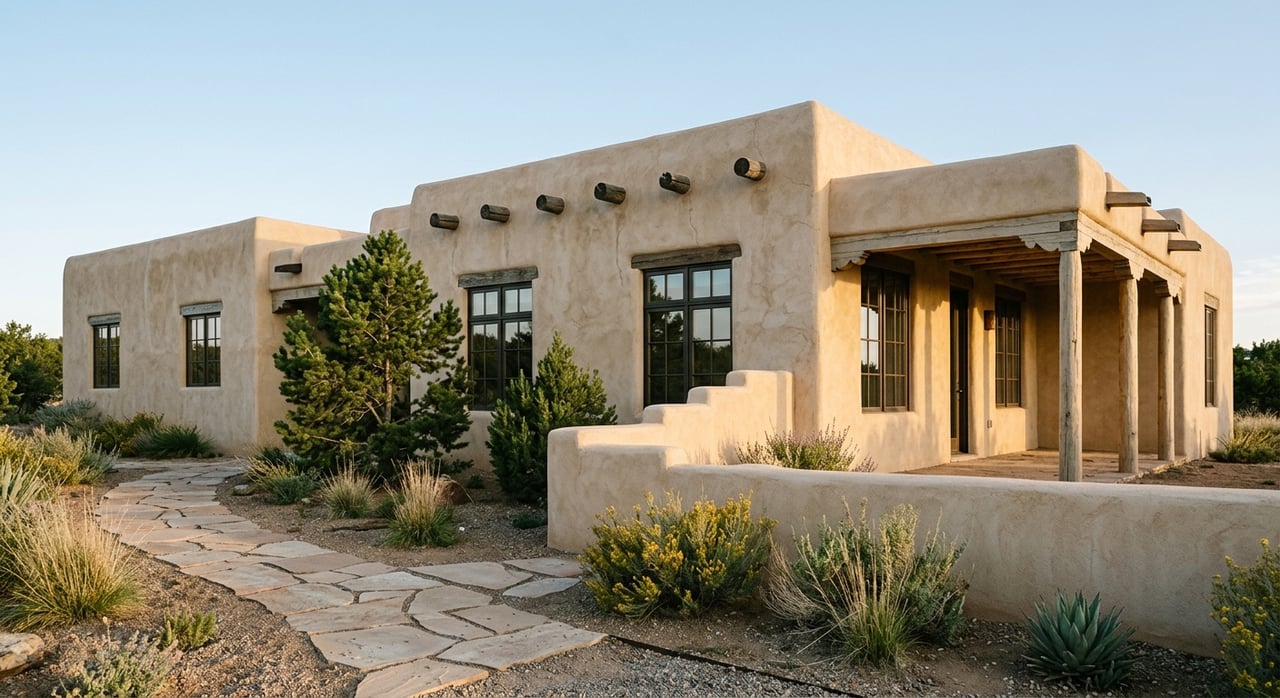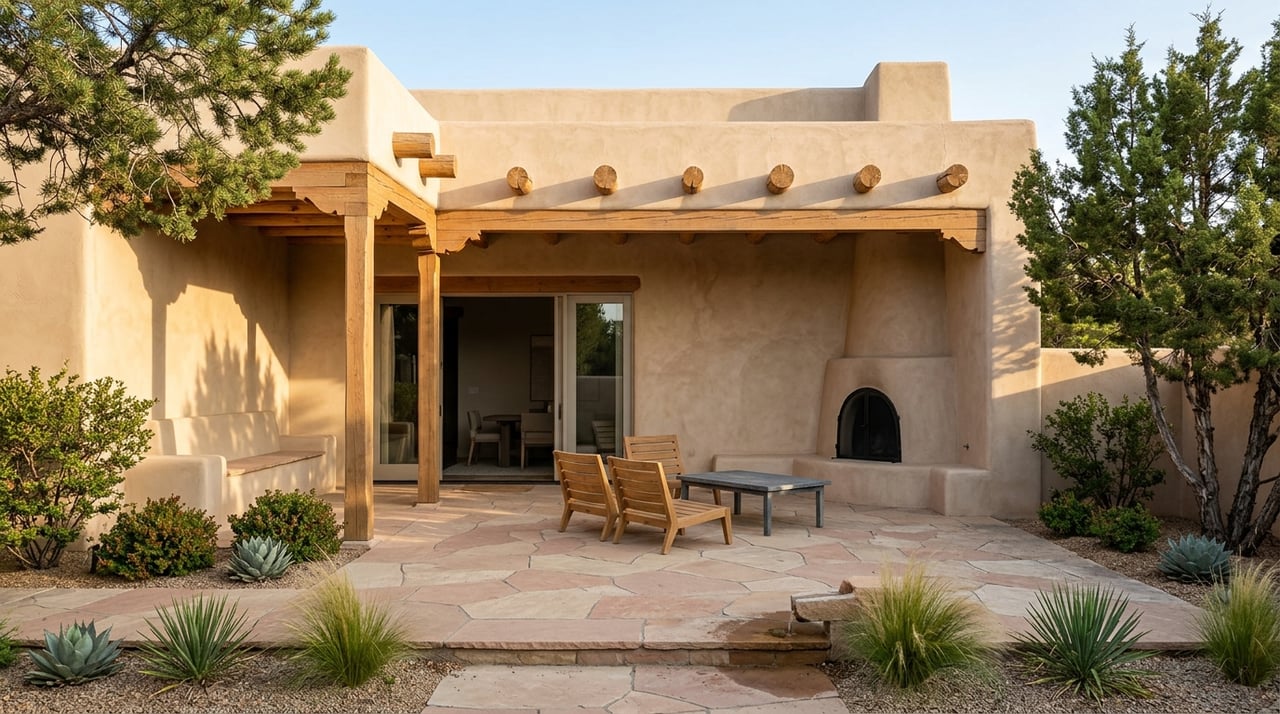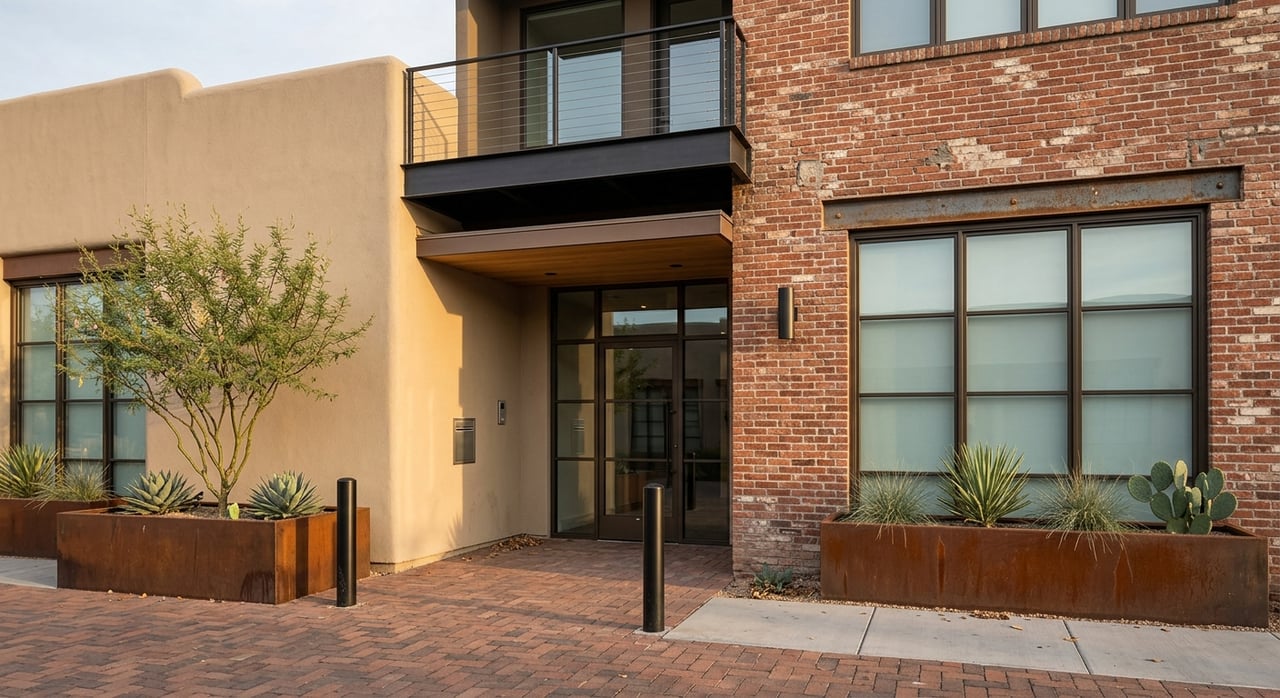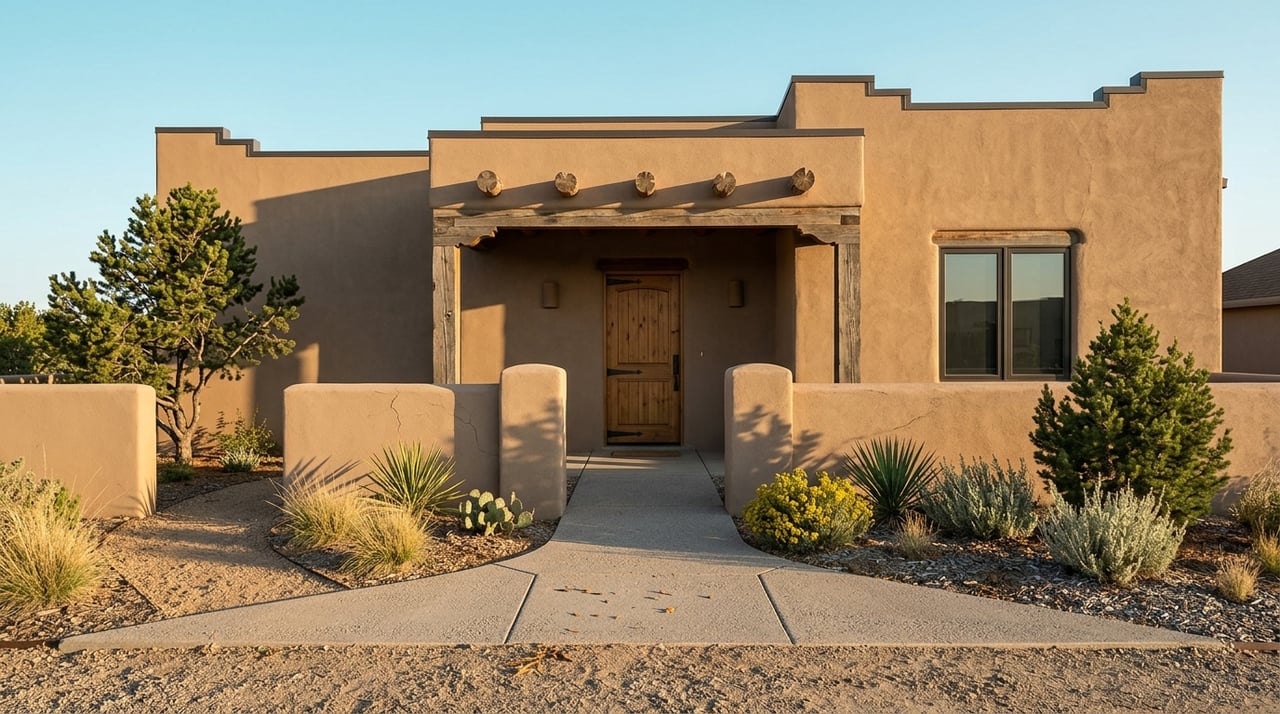
"No customer shall use more water than that allotted in the original lot plat."
That sentence sits in the rules of the Las Campanas Water Cooperative, the member-owned utility that serves most of the community. It is one of the most important facts about any Las Campanas home, and it almost never shows up next to the square footage, the view corridor or the asking price. Every lot carries its own annual water allocation, set when the land was platted. That figure, more than the size of the house, decides when an ordinary water bill starts carrying surcharges, and at what rate.
As of this week the stakes are a little higher. The Cooperative's new rate table took effect on October 1, 2026.
A cap that travels with the land
The Cooperative says plainly that "every lot in Las Campanas is assigned an annual water allocation, expressed in acre-feet," and that an owner can find it on the water bill or by calling the Co-op office. The Las Campanas Master Design Guidelines add that recorded plats spell out each lot's water allocation and its pool criteria.
The 2026 surcharge schedule sorts residential lots into five allocation bands. The monthly averages below are simple division, included because water bills arrive monthly while the allocation is annual.
| Lot allocation | Gallons per year | Rough monthly average |
|---|---|---|
| 0.25 acre-foot | 81,457 | about 6,800 |
| 0.4 acre-foot | 130,331 | about 10,860 |
| 0.5 acre-foot | 162,914 | about 13,580 |
| 0.75 acre-foot | 244,371 | about 20,360 |
| 1.0 acre-foot | 325,828 | about 27,150 |
On the smallest band, that works out to a fourfold spread from one lot to the next. Two homes of similar size and finish can come with very different water budgets because of a line drawn on a plat decades ago. The allocation also limits more than the faucets. The pool rules for a given lot sit on that same recorded plat.
The two Cooperative documents give slightly different conversions. The welcome brochure puts an acre-foot at 325,851 gallons, and the 2026 rate table uses 325,828. The difference is small, but the rate table is the one that drives billing.
Why the monthly bill hides the annual limit
The Cooperative's regular usage charges run on a monthly two-tier structure. Under the rates effective October 1, 2026, the first 10,000 gallons each month cost $9.57 per 1,000 gallons. Anything above that costs $19.61 per 1,000.
Those two pricing systems don't line up. A household that stays inside the cheaper monthly tier every month of the year would use up to 120,000 gallons. On a 0.25 acre-foot lot, the allocation is 81,457 gallons. That owner could pay the lowest usage rate on every bill and still run well past the lot's annual allocation.
Above the allocation, surcharges apply "in addition to" the normal water rates. They rise in steps: $18.75, then $37.08, then $73.94 per 1,000 gallons, with the thresholds set by each lot's allocation band. The surcharge notice arrives with the water bill and is due on the normal payment schedule.
Here is a simple example using the October 2026 tables. Take 120,000 gallons a year of identical use on two lots:
- On a 0.5 acre-foot lot, the use stays under the 162,914-gallon allocation, so no surcharge applies.
- On a 0.25 acre-foot lot, roughly 38,500 gallons fall in the first surcharge band, between 81,458 and 162,914 gallons. At $18.75 per 1,000, that adds about $720 to the year's water charges.
The lawn, the drip lines and the household are the same. The plat is different. Bigger irrigated yards push the gap further, because the higher surcharge steps cost about two and four times the first one.
The public materials leave one variable open. The rules define a billing period as meter reads about 30 days apart, but they don't say whether the annual allocation is counted by calendar year, by some other fixed year or on a rolling 12 months. Ask the Co-op office before you assume that a wet spring makes up for a dry summer.
What moved on October 1, 2026
The new rate table lists each change by date, so the trend is easy to read:
| Charge | Oct. 1, 2025 | Oct. 1, 2026 |
|---|---|---|
| Tier 1 water, per 1,000 gal | $9.28 | $9.57 |
| Tier 2 water, per 1,000 gal | $19.32 | $19.61 |
| Monthly water maintenance, ¾" meter | $28.51 | $30.31 |
| Monthly sewer maintenance | $67.10 | $75.07 |
The sewer charge made the biggest move, up $7.97 a month, or about 11.9 percent. With a ¾-inch meter, a home now pays $105.38 a month in fixed water and sewer charges before it uses a single gallon. That comes to about $1,265 a year.
The Cooperative's July 28, 2026 board materials list three causes for the increase. The first is escalation in the operating contract with Jacobs, tied to June 30, 2026 CPI and ECI figures. The second is a 3.75 percent increase, effective July 1, 2026, in what Santa Fe County charges the Co-op for water, which went from $7.90 to $8.18 per 1,000 gallons. The third is what the packet calls "BBD expenses." The board president's report describes the approach as adjusting rates "only to pass through direct cost increases in our water supply and Jacobs operational expenses, while absorbing other cost inflation." The same packet schedules an SBR 1 refurbishment for 2026 and lists a lift-station upgrade program as a near-term priority, but it doesn't link either one specifically to the sewer increase.
The pass-through approach has a history. In 2025 the Co-op explained that County water costs and the Jacobs contract together make up more than 75 percent of its operating expenses. When those two lines go up, member rates follow. That is the pattern to expect on future bills.
Supply is part of the picture too. Las Campanas is a partner, with the City and County, in the Buckman Direct Diversion. At the BDD board's February 2026 meeting, staff called 2025 a very challenging year on the Rio Grande but said the diversion ran without curtailment all year. The Co-op has drafted drought-emergency plans. Its July 2026 presentation includes a baseline conservation program, such as no irrigation from 10 a.m. to 6 p.m. between May and October, but marks it as proposed, not adopted.
One address, three separate bills
Water is one of three cost streams, and each comes from a different entity. The Cooperative states that it is financially separate from both the Las Campanas Master Association and The Club.
The Master Association. The 2026 schedule, effective January 1, sets a $3,852 Master component for every estate and adds Reserve and Beneficial amounts that vary by enclave. Annual totals range from $4,296 in Dayflower to $16,092 for Club Casitas properties carrying additional beneficial and reserve charges. Assessments are billed quarterly, and the schedule lists a $150 transfer fee at sale. Assessments are due on the first day of January, April, July and October.
The Club. Membership is a separate decision. The amended Master Declaration, recorded in December 2025, says the golf facilities "are not Common Areas" and that nothing in the declaration gives an owner the right to use them. The Club describes membership as by invitation. Get fees, dues and transfer terms directly from The Club during due diligence.
Water and sewer. Parkside and Dayflower, Estates I and II, get their water from Santa Fe County and not from the Co-op, so the Co-op's water tiers and allocation surcharges described above apply to the other estates. The Co-op handles wastewater for every estate.
The diligence sequence for a Las Campanas offer
The allocation is easy to confirm once you know to ask for it. A practical order:
- Ask the seller for a recent Co-op bill, which shows the lot's allocation, or confirm it with the Co-op office.
- Ask for a full year of bills, so you can compare actual use with the allocation and see whether surcharge notices have been arriving.
- Pull the recorded plat to confirm the allocation and any pool criteria for the lot.
- If you plan new plantings, a pool or exterior work, budget time for Design Review Committee approval, which is required before any landscape, site or exterior work begins. The posted Design Guidelines are dated September 27, 2022, so confirm the current requirements with the committee.
- Get Club membership terms in writing, separately from the purchase.
The Co-op's leak-adjustment rule excludes losses from filling, running, overflowing or failing pools, hot tubs and cisterns, so a pool's water use counts in full.
Quick answers
Can a lot's allocation be raised or bought from another lot? The Co-op's public materials don't describe any transfer or purchase process. Assume the plat figure holds unless the Co-op tells you otherwise.
Does a Las Campanas home come with golf privileges? No. The 2025 Master Declaration separates Master Association membership from any rights at the golf facilities, which are handled by contract with The Club.
When do the Cooperative's rates usually change? The last two increases took effect on October 1 in 2025 and 2026, each passing through County water costs and the Jacobs operating contract.
At Ricky Allen-Tara Earley Group, we treat a Las Campanas lot's water allocation as part of the home's story, confirmed and documented before an offer goes in. If you're weighing a Las Campanas estate, talk with the RCT Team and we'll pull the plat and the bills with you.
This article is general information, not legal, tax or financial advice. Consult a qualified professional about your situation.